

Both the ECB and the BoE have fulfilled their monetary policy obligations for 2017. Draghi played down any speculation about a QE end date, while the BoE refrained from turning hawkish, despite inflation accelerating to 3.1% yoy. Market participants now turn their eyes to the EU summit.
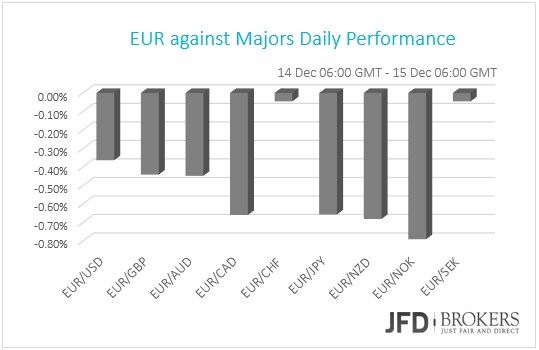
The Euro feels the heat of Draghi’s remarks
Yesterday, the ECB decided to keep policy unchanged as was widely expected. In the statement accompanying the decision, the bank repeated that asset purchases will continue until September 2018, or beyond if needed, and that the program can be extended or expanded if the outlook becomes less favorable. As for the economic projections, the Bank raised fairly its GDP estimates, and revised higher its inflation forecasts for 2018. Nevertheless, the first inflation estimate for 2020 was 1.7% yoy, which is less than the Bank’s target of below but close to 2%, and suggests that interest rates are likely to remain low for longer than previously anticipated.
The initial reaction in the common currency was positive, perhaps due to the GDP upgrades, but that was only temporary. The currency came under selling interest following Draghi’s remarks. In the Q&A session, the ECB Chief said that officials did not discuss cutting the link between QE and inflation. Remember that the minutes of the previous ECB gathering revealed that some policymakers wanted to set a clear end date to the QE program, meaning they may prefer to cut the inflation link. Draghi also made it clear that the “vast majority” of ECB wants an open-ended program, and that they never discussed a sudden stop to QE.
Read the full financial markets daily report on JFD Research.